Where Community, Wildlife & Heritage Meet

A pioneering Maasai-led conservation model shaping Kenya’s conservancy movement since 1992

The Birth of a Conservation Movement

Founded in 1992, Mara Olchoro Conservancy is among Kenya’s earliest community conservancies. The idea emerged when wheat farmer Willy Robert proposed to Lerionka Ole Ntutu that landowners could earn conservation fees by protecting wildlife.

Five elders formed the foundation — Lerionka Ole Ntutu, Rufus Ole Kuluo, Nelson Ole Njapit, Kanyinke Ole Nabaala and Meshack Ole Nampaso — later joined by Ole Murero, Saapei Ole Maitai, and Samuel Ole Koriata, growing leadership to eight elders and today over 180 landowners.

Their decision triggered a landmark legal battle with the county council. The elders’ victory changed Kenya’s conservation landscape, enabling communities nationwide to benefit directly from wildlife — now over 119 conservancies exist.

1992

Year Established

15,993

Acres Protected

180+

Landowners

119

Conservancies Inspired

Land, Corridors & Strategic Location

In the northern reaches of the Maasai Mara, lies OlChoro Conservancy — a landscape owned by Maasai families who chose stewardship over subdivision, and wilderness over fences. To the untrained eye, it might seem like just another patch of savannah, but within the broader ecological tapestry of the Mara, Ol Choro is a quiet yet vital thread. The land has always been more than soil, grass, and acacias. For generations, it sustained people and cattle, and provided seasonal refuge for wildlife long before conservation became formal. When development and fencing swept across parts of Kenya, the Maasai landowners of Ol Choro took a different path. Rather than divide the land into private homesteads, they kept the rangelands open and intact. Through a lease-based conservation model, the territory remained communally owned while being protected for wildlife and low-impact tourism. This decision preserved a living landscape — one that continues to function ecologically, culturally, and economically. Wildlife does not read maps nor recognize borders, and the story of Ol Choro is as much about movement as it is about the land itself.

Wildebeest spread across its plains during the wet months; elephants traverse its valleys in slow procession; predators follow the ancient logic of territory and hunting grounds; and zebras drift through in alert, ever-shifting bands. These movements are only possible because the conservancy forms part of a larger network of open land that links Mara North, Enonkishu, community grazing lands, the Maasai Mara National Reserve, and ultimately the Serengeti in Tanzania. These unfenced pathways are the corridors of life — invisible yet essential — and their survival is made possible by the deliberate choice to keep the rangelands whole. Viewed from the summit of Kileleoni Hill, the highest point in the region, OlChoro’s strategic importance becomes unmistakable. To the east, the Mara River cuts through belts of riverine forest. To the west, the land blends into communal grazing territories. To the north, private conservancies provide further refuge. To the south, the protected Reserve acts as the heart of the ecosystem. Ol Choro sits at the crossroads of these landscapes, anchoring the northern Mara and ensuring that wildlife can disperse, graze, breed, and migrate across seasons without interruption. In a time when fragmentation threatens wildlife across Africa, Ol Choro remains a testament to a different vision — one where land is preserved as a functional rangeland, where corridors remain open, and where strategic location strengthens the resilience of an entire ecosystem. Here, land is heritage, corridors are survival, and geography is destiny.

Wildlife & Community Coexistence

At dawn in Ol-Choro Conservancy, the plains awaken to a quiet negotiation that has unfolded for generations. Elephants move in steady procession across the grasslands, tracing migratory routes as old as memory itself. Lions, at one of the highest densities in the Mara at 15.15 lions per 100 km², stretch beneath the cool shade of acacia trees, scanning a horizon dotted with buffalo, giraffes, zebras, elands, gazelles, leopards and cheetahs. High above, vultures, kestrels, and eagles ride thermals while monkeys chatter in riverine thickets along the Mara River. In most landscapes, predators and livestock are competing claims on land — but in Ol-Choro, coexistence is not just possible, it is practiced. The Maasai community, whose lives are woven into the rhythms of this place, share the rangeland with wildlife and manage a remarkably low 1% annual livestock loss — proof that pastoralism and predators do not need to exist in opposition. Losses are acknowledged, but accepted as part of an ecological relationship the community understands deeply. Controlled grazing is one of the quiet instruments of this coexistence. Rather than degrade the grasslands, well-timed livestock movement mimics the behavior of migratory herbivores. Hooves aerate the soil, dung enriches it, and rested patches spring back greener and richer in biodiversity.

In the wake of cattle, grasses regenerate in fresh flushes — providing forage for wildebeest and zebras, and attracting predators who in turn keep herbivore numbers in balance. What appears to be merely grazing is in truth a form of ecosystem management born long before conservation science named it. During the dry season, when water grows scarce and competition grows sharp, the Maasai and their cattle move along established routes, allowing wildlife unhindered access to key areas. During wetter months, elephants disperse widely, and lions scent-mark borders invisible to the human eye. Both people and wildlife adjust, not through confrontation, but through understanding and flexibility. This reciprocity has shaped the conservancy into a functional ecological corridor — one that sustains not only the famous predators and plains game of the Mara, but the communities who call it home. In the evenings, as the sun sinks behind Kileleoni Hill and cattle bells mingle with distant roars, Ol-Choro tells its own story: that the future of conservation is not only in parks and reserves, but in places where people and wildlife make room for each other.

Rhino Conservation

Rhino conservation at Mara Olchoro Conservancy is a story shaped by courage, patience, and the unwavering belief that communities can protect even the most vulnerable wildlife. In the early 1990s, when Kenya was still recovering from decades of intense rhino poaching, the idea of hosting rhinos on community land was both ambitious and risky. Yet the elders of Mara Olchoro chose to take that step, believing that conservation could succeed only if local people became its custodians. The journey began in 1992 with the arrival of two white rhinos from Solio Ranch, followed a year later by additional rhinos translocated from South Africa. Their arrival marked a new chapter for the conservancy and for the wider Maasai Mara ecosystem. These animals were introduced not only to restore a lost species, but also to demonstrate that community-led conservation could work at the highest level, even with species that require intense protection and long-term commitment. The years that followed were challenging. Some rhinos succumbed to disease, injuries, and the natural stresses of adapting to a new environment. Territorial conflicts among males required careful management, and at times difficult decisions had to be made to ensure the safety of both the animals and the ecosystem. Through it all, rangers remained vigilant, walking the land daily, learning the habits of each rhino, and responding quickly whenever concerns arose. By the mid-2010s, the program had endured many setbacks, and only two white rhinos remained on Ol-Choro’s land. Rather than marking an end, their survival became a powerful symbol of resilience. These rhinos came to represent not just a conservation project, but decades of effort, sacrifice, and learning. Around them, security was strengthened, monitoring intensified, and partnerships with wildlife authorities deepened. Today, the two white rhinos living at Mara Olchoro are protected through continuous day-and-night monitoring by trained community rangers working alongside national wildlife authorities. Every movement is tracked, every risk assessed, and every patrol contributes to their safety. The use of modern technology, combined with traditional tracking knowledge, ensures that these animals are never out of sight or out of mind. Their presence tells a larger story—one of a community that chose conservation over short-term gain, that stood firm through legal battles, ecological challenges, and financial strain. While the rhino population at Ol-Choro remains small, its significance is immense. It proves that conservation success is not measured only in numbers, but in commitment, stewardship, and the willingness to protect life even when the odds are high. At Mara Olchoro Conservancy, the rhinos are more than wildlife under protection. They are living reminders of a promise made decades ago—to safeguard this land, its wildlife, and its heritage for generations yet to come.

Governance, Security & Operations

At the heart of Mara Olchoro Conservancy is a story of trust, responsibility, and community leadership. Established as a private trust, the conservancy is governed by a Board of Trustees. This structure ensures that the landowners who gave life to the conservancy continue to guide its vision and protect its future. On the ground, conservation is lived every day by a dedicated team of more than35 trained rangers. Their work begins before sunrise and continues through the night, with round-the-clock rhino monitoring forming the backbone of security operations. Moving quietly on foot, by vehicle, and on motorbike, rangers patrol the land daily, reading tracks, monitoring wildlife movements, and responding swiftly to any threats.

As conservation has evolved, so too have the tools used to protect this landscape. What began with handwritten patrol notes and later the WILD App has now advanced to EarthRanger, a powerful real-time monitoring system that allows rangers to collect, transmit, and analyze data directly from the field. Every patrol, sighting, and incident becomes part of a living picture of the conservancy, guiding smarter decisions and faster responses. Rangers are stationed across key points around Mara Olchoro Conservancy, ensuring no corner of the conservancy is left unseen. Through daily patrols and constant vigilance, they safeguard wildlife, support scientific monitoring, and uphold a delicate balance between people, livestock, and nature. Their presence is more than security—it is a testament to the community’s enduring commitment to protecting this land for generations to come.

Guardians of the Land

Behind Mara Olchoro Conservancy's conservation success stand dedicated men who have committed their lives to protecting wildlife, community land, and heritage, these two were the first rangers to join the conservancy in 1992 and still stand strong today to provide leadership in wildlife conservation.

 Philip ole Nabaala Corporal Ol-Choro Conservancy

CPL Philip Ole Nabaala

Serving since 1992 • 30+ Years of Service

Philip joined Mara Olchoro Conservancy shortly after its formation, when conservation was still a new and uncertain idea. Armed with only traditional tracking knowledge and sheer determination, he helped protect wildlife during the conservancy’s most challenging early years.

He witnessed the arrival of the first rhinos, survived intense human-wildlife conflict periods, and played a critical role in shaping modern ranger patrol systems. Today, he mentors young rangers, passing down fieldcraft, discipline, and respect for wildlife.
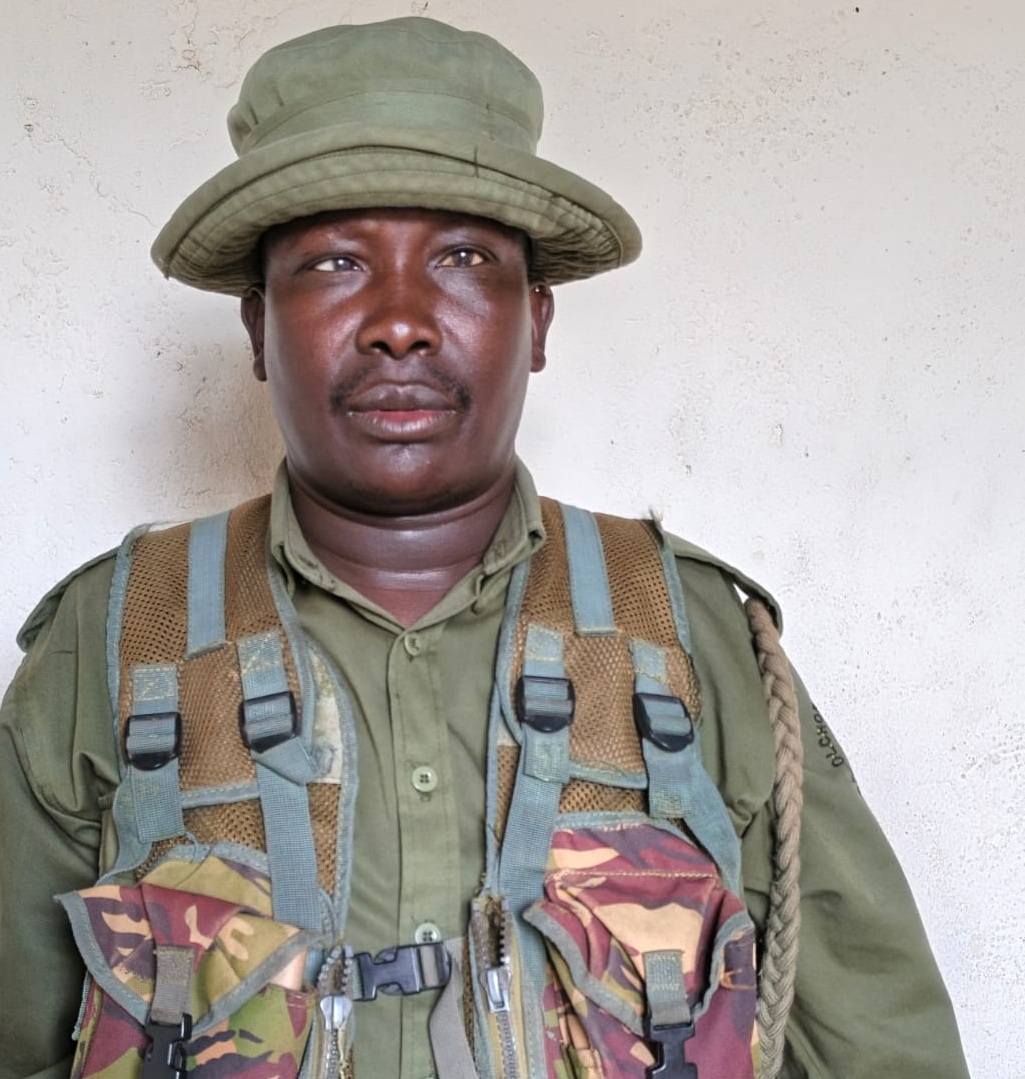
Julias Ole Koros Sergeant Ol-Choro Conservancy

Sgt Julias Ole Koros

Serving since 1992 • 30+ years experience

Julias' journey began as a community scout, walking long distances on foot to monitor wildlife movements and prevent illegal grazing. His deep understanding of the land made him a key figure in protecting vital migration corridors.

Over decades, he has participated in rhino monitoring, anti-poaching patrols, and conflict mitigation between predators and livestock. His service symbolizes the trust between the Maasai community and conservation.